
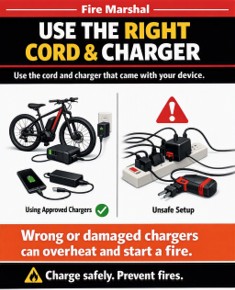
Flipping a light switch, plugging in a coffee maker, charging a laptop computer, or charging tools, especially e-bikes and e-scooters are all second nature for most of us. Electricity makes our lives easier. However, we need to be cautious and always keep safety in mind. Use the cord and charger that came with the device or one approved by the manufacturer.
Safety Tips
- Have all electrical work performed by a qualified, licensed electrician.
- When buying or remodeling a home, have it inspected by a qualified private inspector or in accordance with local requirements.
- Only use one heat-producing appliance (such as a coffee maker, toaster, or space heater) in a receptacle outlet at a time.
- Major appliances (refrigerators, dryers, washers, stoves, etc.) should be plugged directly into a wall receptacle. Do not use extension cords or power strips with these appliances.
- Check electrical cords to ensure they are not running across doorways or under carpets. Extension cords are intended for temporary use only.
Electrical Fire Statistics
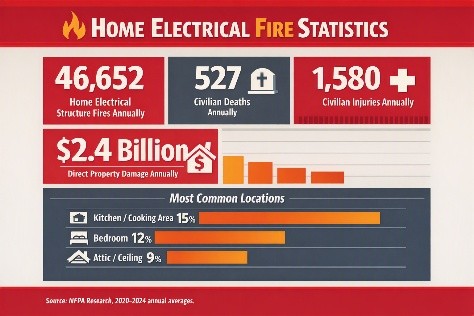
Statistics show that local fire departments respond to an estimated annual average of 46,652 home structure fires in which an electrical failure or malfunction was reported as a contributing factor to ignition, or the equipment involved was classified as electrical distribution, lighting, or power transfer equipment.
These home electrical fires cause an estimated annual average of:
- 525 civilian deaths
- 1,580 civilian injuries
- $2.4 billion in direct property damage
Home electrical fires account for approximately:
- 13% of all home structure fires
- 18% of all home structure fire deaths
- 15% of all direct property damage resulting from home structure fires
The most common locations where home electrical fires occur are:
- Kitchen or cooking area: 15%
- Bedroom: 12.5%
- Attic or ceiling: 9%
Warning Signs of Electrical Problems
If you notice any of the following conditions in your home or other structure, take them seriously:
- Frequent blown fuses or tripped circuit breakers
- A tingling sensation when touching an electrical appliance
- Discolored or warm wall outlets
- A burning or rubbery smell coming from an appliance
- Flickering or dimming lights
- Sparks coming from an electrical outlet
If you believe there is an immediate fire or life-threatening electrical emergency, call 911 immediately.