
If a fire is growing rapidly, producing heavy black smoke or blocking your escape, leave immediately, close the door behind you if possible, and call 9-1-1.
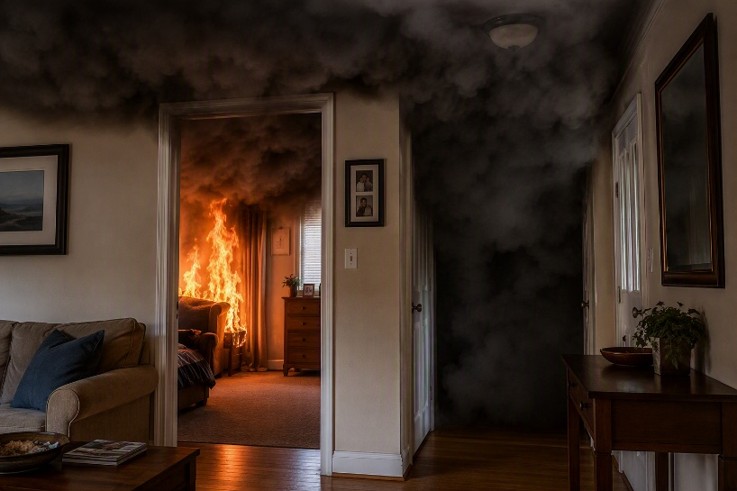
The Fire Marshal describes the five main classes of fire, the four stages of fire, and explains how important it is to know your fire — the right response can save your life!
Five Main Classes of Fire
Fires are grouped into classes based on the type of fuel feeding them. Knowing the class helps you pick the right tool to put it out. In the United States, the five main classes are Class A, B, C, D, and K:
Class “A”: Ordinary Combustibles – wood, paper, cloth, rubber, and many plastics
- Water is usually effective because it cools the burning materials.
Class “B”: Flammable Liquids – gasoline, diesel, paint, and alcohol.
- Never use water. It can spread the burning fuel.
- Use foam, dry chemical, or CO₂ extinguishers.
Class “C”: Electrical – energized electrical equipment, wiring, appliances, or electronics
- Turn off the power if it is SAFE to do so, then use a dry chemical or CO₂ extinguisher.
- Once the electrical source is de-energized, the remaining burning material may be treated according to its fuel type.
Class “D”: Combustible Metals – magnesium, sodium, titanium, and aluminum powder
- These require special Class D dry-powder extinguisher agents.
- NEVER use water, as it can cause a violent reaction with some burning metals.
Class “K”: Cooking Oils and Fats – specifically from cooking commonly found in commercial kitchens
- NEVER use water. It can cause dangerous flare-ups.
- Use a Class K extinguisher designed for cooking oil fires.
In any of these situations, prior to using any of these applications, dial 9-1-1 first to report a fire. Remain as calm as you can when speaking with the call taker.
Four Stages of Fire
Fires can start unexpectedly and escalate rapidly. It is essential to understand and be able to identify the different stages of a fire. This knowledge is not only crucial for effective fire suppression but also for ensuring your safety.
In all cases, there are four (4) stages of fire, and for the most part, all develop in predictable stages. Understanding the four stages of fire helps in recognizing how and when a fire is escalating and the level of danger.
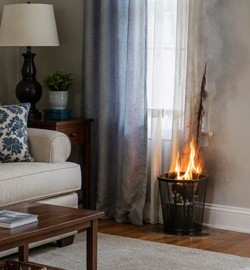
Ignition (Incipient) – Fire begins. Small flame, minimal smoke and heat.
Growth – Fire spreads to nearby fuel. Heat and smoke rise quickly.
Fully Developed – Fire is at its peak. All available fuel is burning.
Decay – Fire weakens due to lack of oxygen or fuel.
Portable Fire Extinguishers
Portable fire extinguishers are intended only for small, incipient-stage fires. If you are unable to get the fire under control within this stage, then immediately call 9-1-1.